


What is the STR MK3 stretcher biocontainment unit?
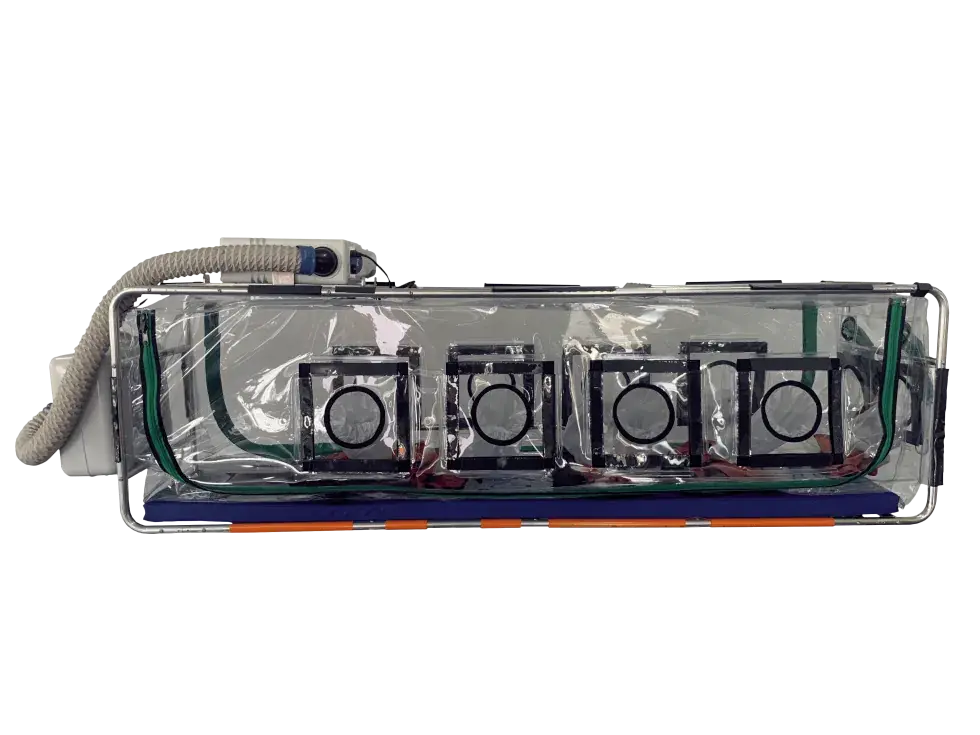
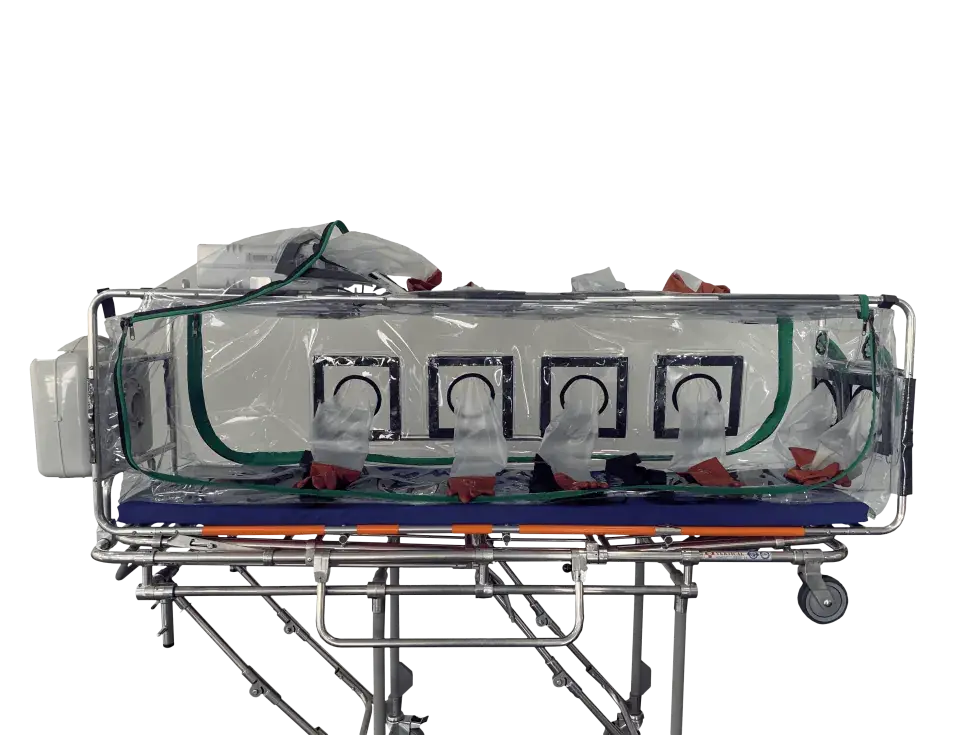
The STR MK3 is a compact, lightweight stretcher biocontainment unit that is placed on top of a hospital stretcher to quickly isolate an infected patient during transport.
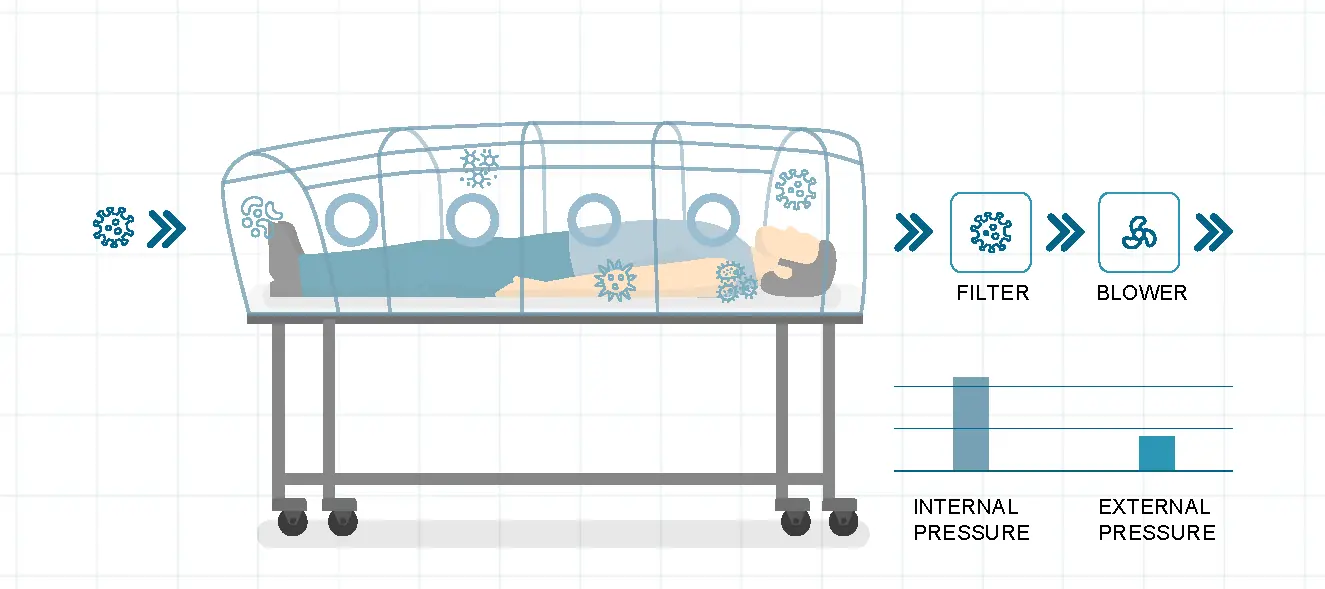
It was designed to limit the spread of SARS-CoV-2 and other airborne diseases while a patient is moved. A filtration system and an air outlet pipe keep the patient environment at negative pressure relative to the outside, and the sealed envelope adds a further barrier that keeps potential pathogens from escaping into the surrounding area.
Intelligent Care (Incare) is part of Stretchers Industries OOD, a manufacturer based in Sofia, Bulgaria, and supplies hospitals and healthcare providers across Europe and beyond. The STR MK3 belongs to its line of isolation units for hospitals.
Technical data
The air filtration system is the core of the stretcher biocontainment unit. The figures below come from the STR MK3 technical documentation.
- Filtration grade
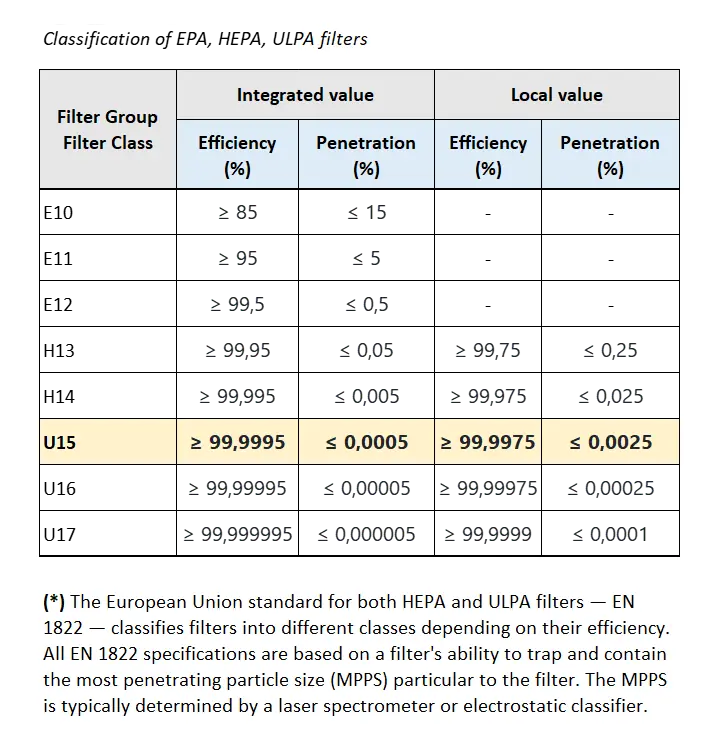
- U15 NBC (nuclear, biological and chemical) protection, 99.9975% efficiency
- Particle size tested
- 0.3 microns solid and liquid particles, average size
- Operating modes
- 2 negative pressure and positive pressure
- Battery backup
- Up to 12 h for transport away from mains power
- Maximum load capacity
- 200 kg
- Compatibility
- Any stretcher measurements compliant with any stretcher or hospital bed
U15 is an ULPA class in the European filter classification EN 1822-1. For an explanation of what the HEPA and ULPA classes mean in practice, read our guide to HEPA and ULPA filters in isolation units.
How does the STR MK3 work?
A blower draws air through the U15 filter and controls the pressure inside the sealed envelope of the stretcher biocontainment unit, so that air flows only in the direction that protects the person at risk.
The same unit can be used in two ways, depending on who needs protection:
Protecting the outside from the patient
The external environment is protected from the infected patient contained inside. The STR MK3 can act as the primary transport for a patient with a high infectious risk, or as a secondary transport within a facility for a patient affected by microbiological agents.
Protecting the patient from the outside
This mode protects an immunocompromised patient at risk of infection from the external environment, for example a severely immunosuppressed patient who has to cross shared corridors or lifts.
Pressure control complements, and does not replace, the standard and transmission-based precautions described in the CDC Guideline for Isolation Precautions. Our guide to negative and positive pressure isolation explains how the two pressure regimes work and when each is chosen.
Design and features
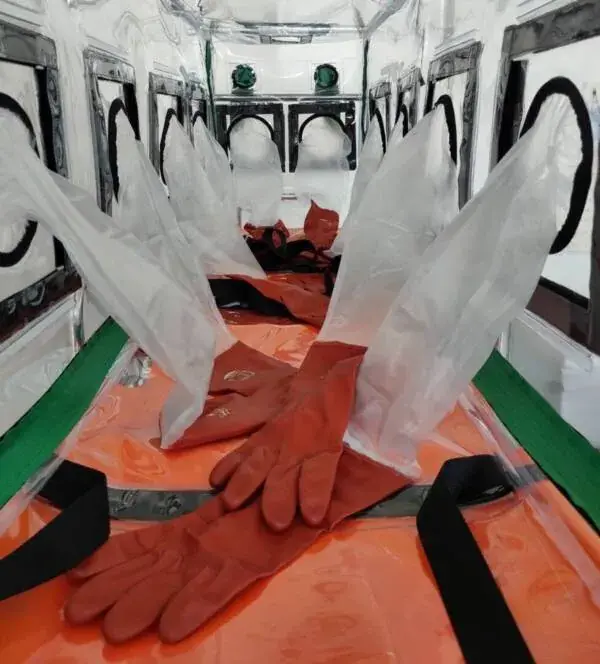
The stretcher biocontainment unit is supplied ready to use. Staff work on the patient through integrated gloves, and lines pass through dedicated ports without opening the envelope.
- Ready to use system
- Durable yet lightweight structure
- Complete side opening for easy patient access
- Measurements compliant with any type of stretcher or hospital bed
- Integrated gloves with sleeves
- Integrated utility portals (e.g. IV poles, ECG cables)
- Positive pressure capability for severely immunosuppressed patients
- Battery backup up to 12 hours
- Does not retain humidity
- Easy to maintain and stock
- Maximum load capacity 200 kg
Where is the stretcher biocontainment unit used?
Wherever a patient with a suspected or confirmed airborne infection has to be moved, or an immunocompromised patient has to be shielded during a transfer.
Because of its compact size and ease of use, the STR MK3 can be deployed quickly in hospitals and clinics, and also outside healthcare buildings, such as schools and airports, where an emergency calls for temporary isolation or a triage zone. Inside a hospital it typically covers transfers from the emergency department to an isolation ward, to imaging or to intensive care.
Frequently asked questions about the STR MK3
Can the STR MK3 be used on our existing stretchers?
Yes. The measurements of the STR MK3 are compliant with any type of stretcher or hospital bed, so the stretcher biocontainment unit is placed on top of equipment the facility already uses rather than replacing it.
What filtration grade does the STR MK3 use?
The air filtration system has an NBC protection grade U15 with an efficiency of 99.9975%, tested to block solid and liquid particles of average size up to 0.3 microns.
How long can the unit run without mains power?
The STR MK3 has a battery backup of up to 12 hours, which keeps the filtration and pressure control running during transfers between departments or buildings.
What is the maximum patient weight?
The maximum load capacity of the STR MK3 is 200 kg.
Can the same stretcher biocontainment unit protect an immunosuppressed patient?
Yes. Besides negative pressure mode, the STR MK3 offers positive pressure capability, used for example for severely immunosuppressed patients who must be protected from the external environment.
Related isolation products
If an add-on stretcher biocontainment unit does not match your workflow, these Incare products integrate isolation into the stretcher, the bed or a chair. See all isolation units.
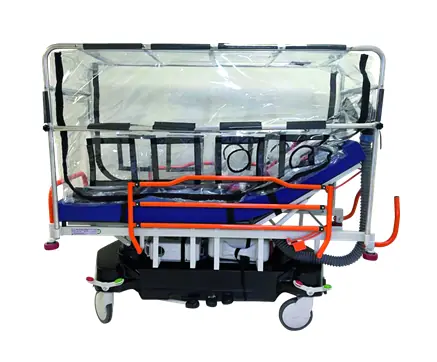 STR MK 4Emergency stretcher with integrated isolation canopy; motorized version STR MK 5.View product
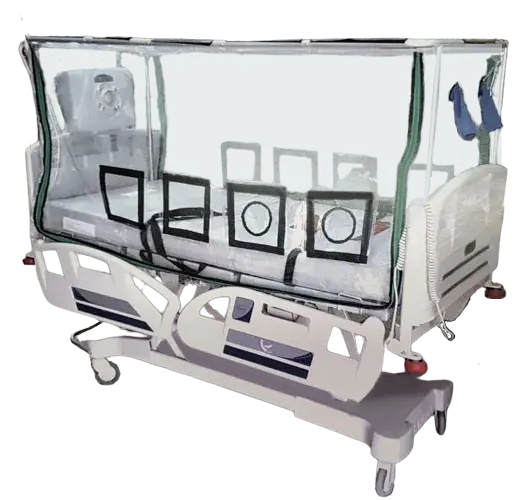 STR MK7 / STR MK8Hospital bed with isolation canopy; the STR MK8 adds a motorized fifth wheel.View product
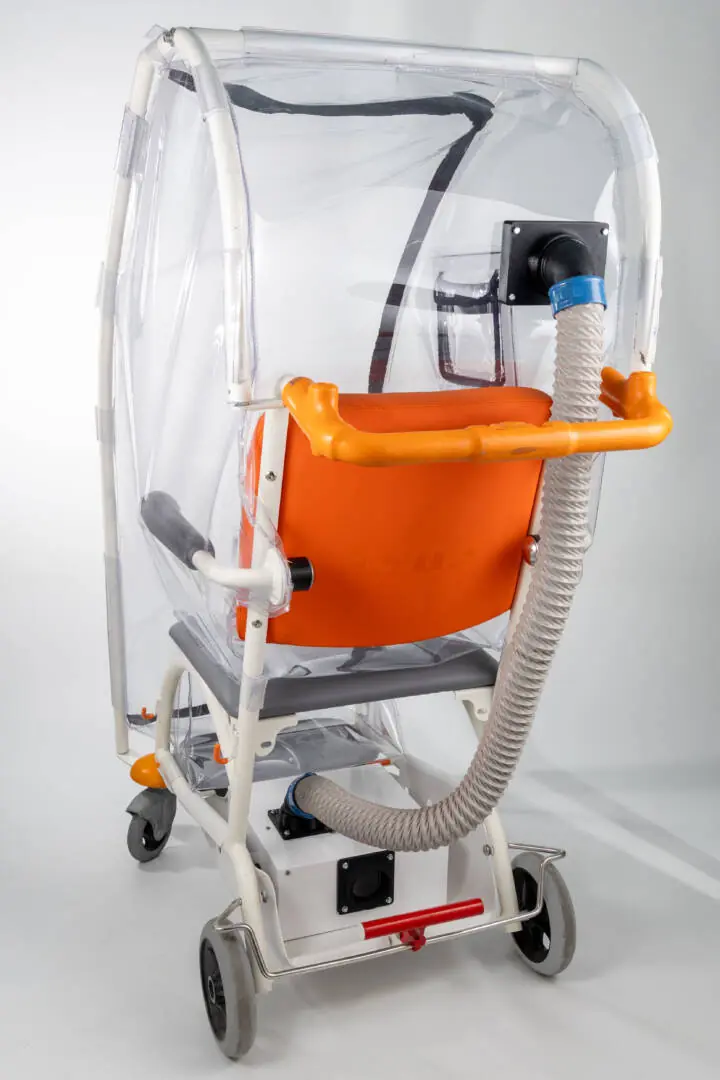 AuraControlled pressure chair for moving seated infectious or immunosuppressed patients.View product
Plan your STR MK3 configuration
Tell us about your stretchers and transfer routes, and our team will advise on the stretcher biocontainment unit and its accessories. Technical details are also in our catalogues.