


What is a modular isolation room?
A modular isolation room is a purpose-built structure, assembled from prefabricated components, that physically separates patients with contagious or highly infectious diseases from the rest of the facility.
Isolation rooms provide a secure, controlled environment when the risk of airborne transmission is high, as with tuberculosis, SARS, MERS and COVID-19. The distinctive feature of Pandora is its modular nature: the components can be assembled quickly to create an isolated, protected space, and the room can cover different areas and adapt to different situations and layouts.
Intelligent Care (Incare) is part of Stretchers Industries OOD, a manufacturer based in Sofia, Bulgaria, and supplies hospitals and healthcare providers across Europe and beyond.
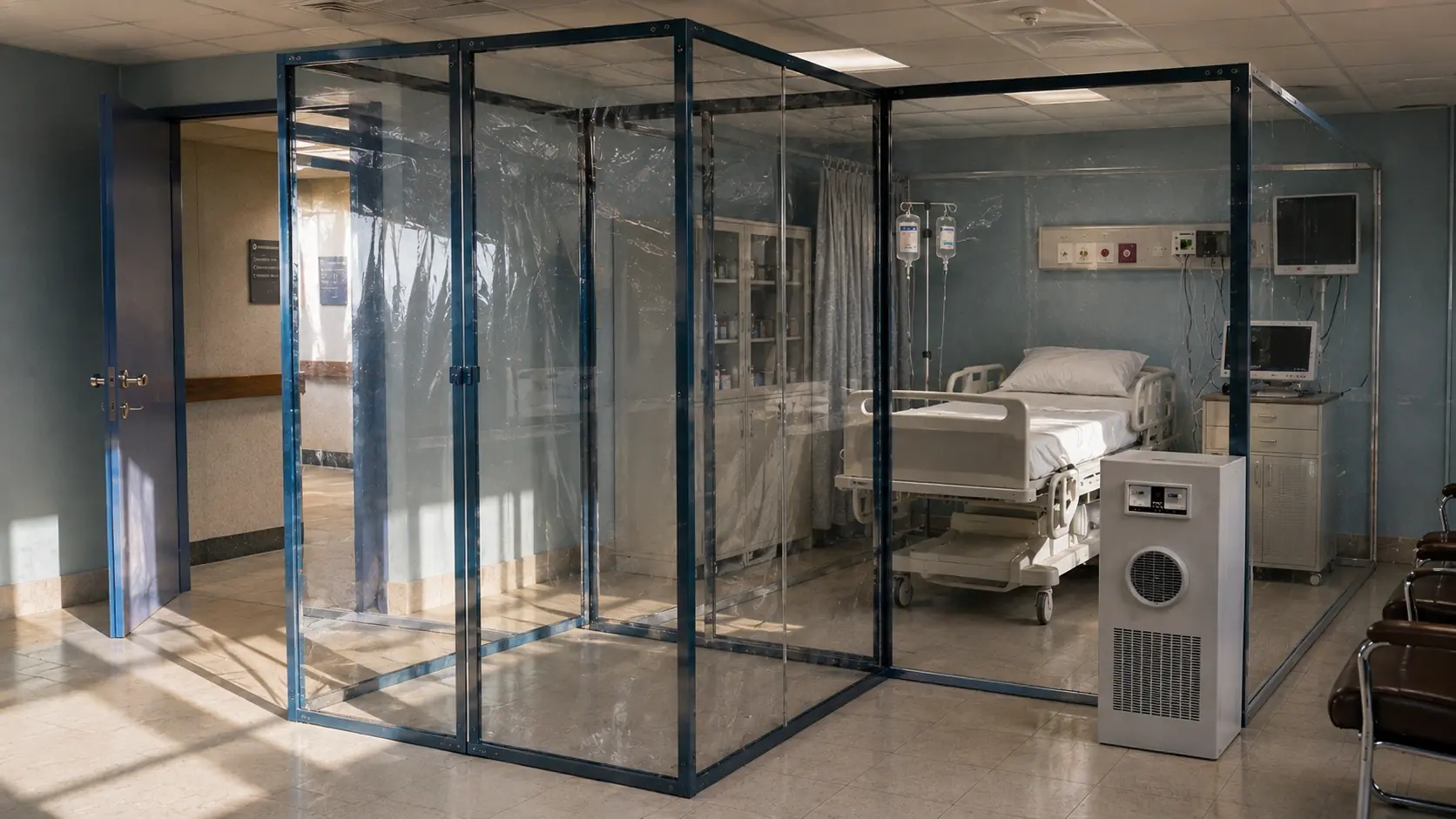
Technical data
Main specifications of Pandora. Because each modular isolation room is custom-built, the final configuration is defined with the facility.
- Filtration grade
- H14 / U15 NBC filters: H14 (HEPA) and U15 (ULPA) upon request
- Particle size tested
- 0.3 microns solid and liquid particles, average size
- Operating modes
- 2 negative or positive pressure, selected with a switch
- Access
- Double door keeps air pressure during entry and exit
- Dimensions
- Custom-built modular structure for any area
- Standards
- On request request the technical data sheet to check all the standards applied
The H14 and U15 classes are defined in EN 1822-1; our guide to HEPA and ULPA filters in isolation units explains the difference.
How does Pandora work?
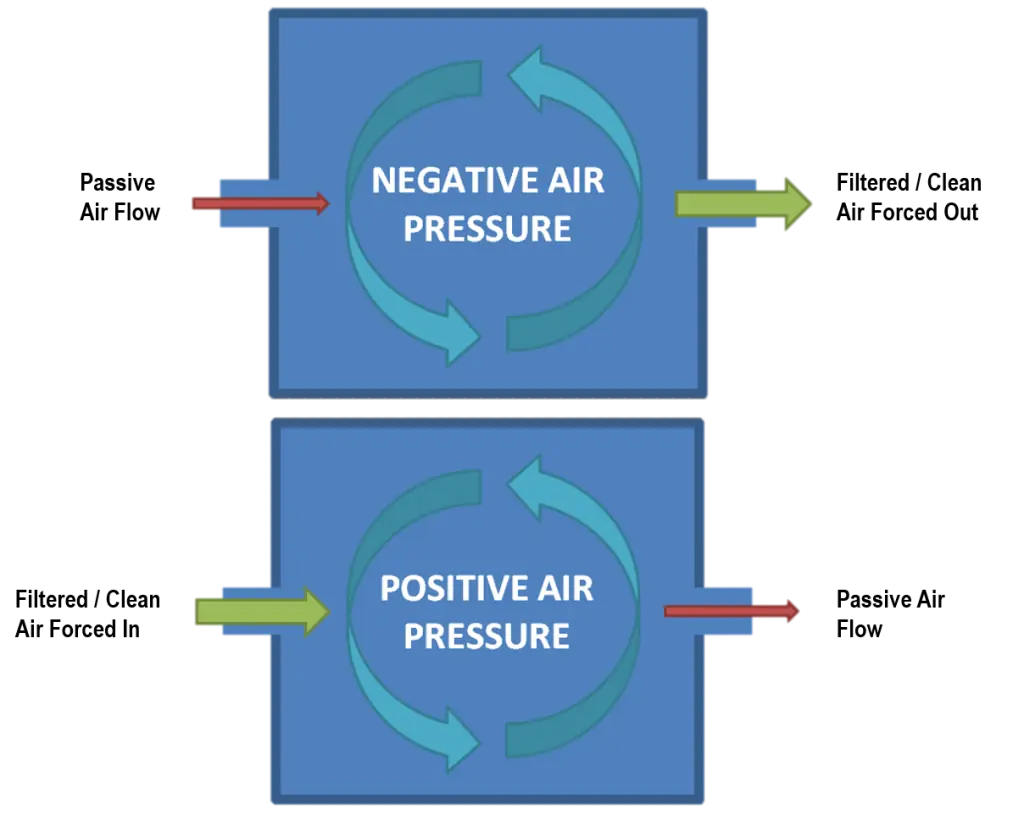
A blower and filtration system controls the air pressure in the modular isolation room, and with a simple switch Pandora changes from negative to positive pressure.
Protecting people outside
Negative air pressure prevents contagious diseases from escaping the room, protecting staff and patients outside the unit.
Protecting the patient inside
Positive air pressure keeps contagious diseases out of the chamber, for patients with weakened immune systems.
The double-door configuration maintains the pressure even when staff enter or exit, which keeps infection control protocols effective. Our guide to negative and positive pressure isolation describes both regimes, and the WHO infection prevention and control programme sets the wider framework for isolation in hospitals.
Design and features of the modular isolation room
Isolation rooms have to meet strict requirements to isolate patients effectively. These are the key elements adopted in the design and production of Pandora:
- Effective isolation: prevents pathogens spreading to the surrounding environment, protecting staff and other patients
- Controlled ventilation: clean air and pressure control, negative or positive
- Hygienic materials: easy to clean and water-resistant, for simple maintenance and disinfection
- Access and egress: quick access for staff through a double-door configuration
- Environmental control: temperature and humidity kept at levels suited to patient comfort and infection prevention
- Monitoring: continuous monitoring of room conditions and of the patient
- Compliance: built to local and national safety regulations; standards listed in the technical data sheet
- Assembly: quick assembly and disassembly as needed
- Air filtration: NBC filters H14 (HEPA) and U15 (ULPA) upon request
Where it is used
The modular isolation room is used in hospitals, clinics, research facilities and laboratories that need biological isolation areas without a permanent building project.
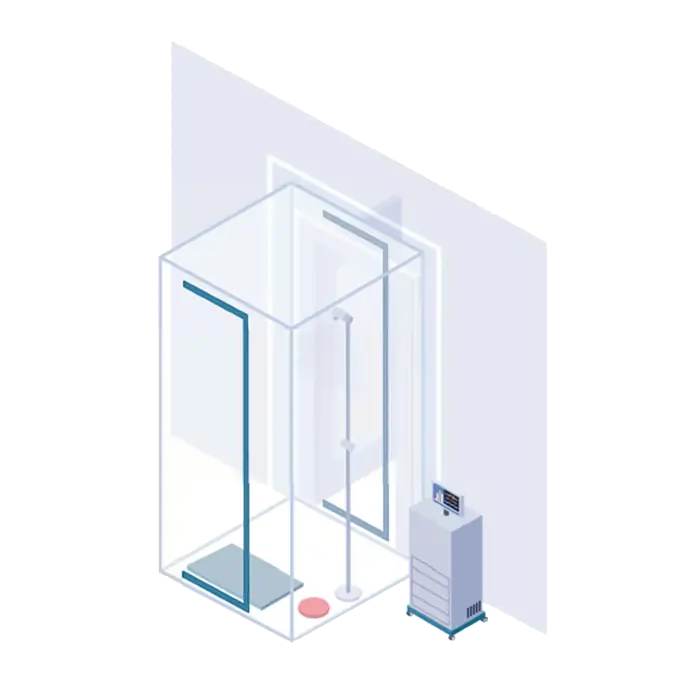
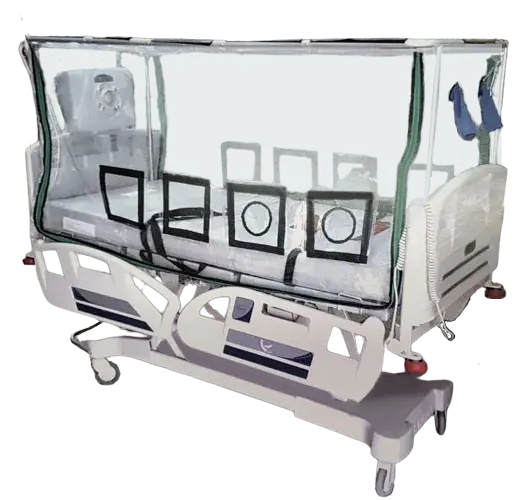
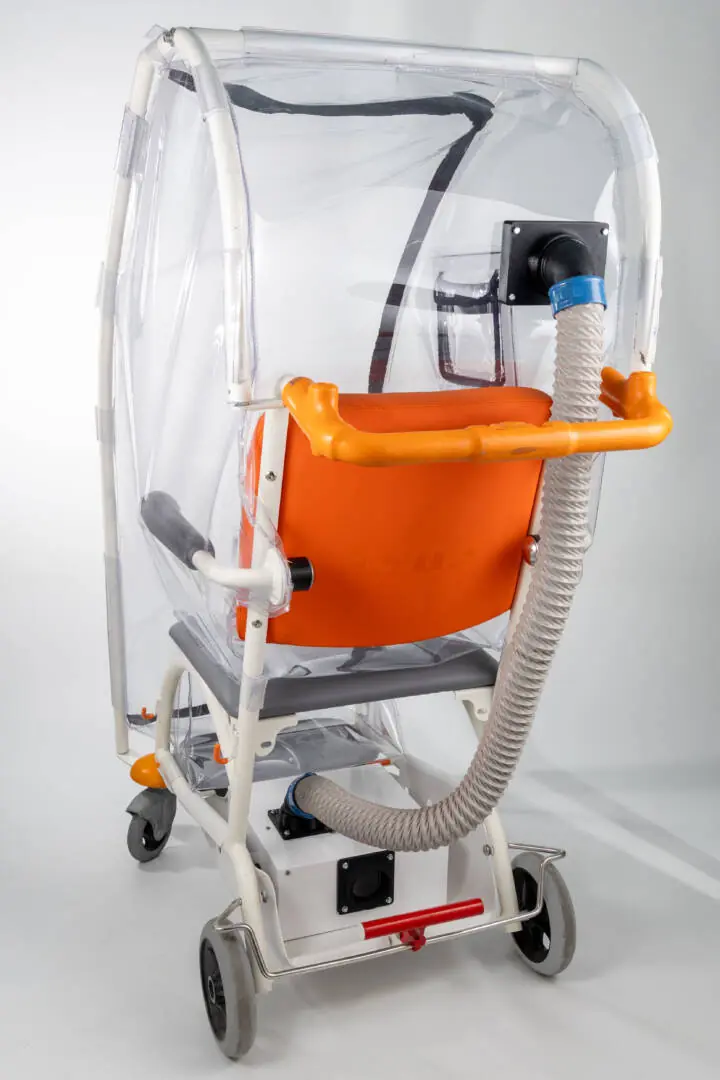
Typical uses are adding isolation capacity to an existing ward, creating a protected area for immunocompromised patients, or setting up a temporary isolation zone during an outbreak. Patients reach the room on isolation transport equipment such as the STR MK3 stretcher unit or the Aura chair, and an antechamber such as Pithos can protect the doorway of conventional rooms.
Frequently asked questions about Pandora
Can Pandora be adapted to our room dimensions?
Yes. Pandora is custom-built to the needs of each healthcare facility, and its modular structure allows it to cover different areas and layouts.
How is the pressure kept stable when staff go in and out?
Through a double-door configuration, which maintains the air pressure even when entering or exiting the chamber.
Which filters does the modular isolation room use?
NBC filters with protection grade H14 (HEPA) and U15 (ULPA) upon request, tested to block solid and liquid particles of average size up to 0.3 microns.
Which standards does Pandora comply with?
The room must comply with local and national safety regulations and requirements. Request the technical data sheet to check all the standards applied to Pandora.
Can Pandora be dismantled and moved?
Yes. Its modular design means the room can be assembled and disassembled as needed, giving flexibility in the use of space and resources.
Related isolation products
Products that work together with the modular isolation room. See all isolation units.
Plan a Pandora installation
Send us the layout of the area and our team will propose a modular isolation room configuration and the technical data sheet. Catalogues are on the catalogues page.