


Two lines of hospital isolation and transport systems
Isolation units protect people from infection; power-assisted systems protect staff from strain. Many hospitals need both.
Intelligent Care is part of Stretchers Industries OOD, based in Sofia, Bulgaria, and supplies healthcare providers across Europe and beyond. Every product can be configured: clients choose specific components and accessories so that the equipment fits the ward, the patients and the procedures. Our hospital isolation and transport systems share key components, so the motorized fifth wheel developed for the power-assisted line is also available on the STR MK 5 stretcher and the STR MK8 bed.
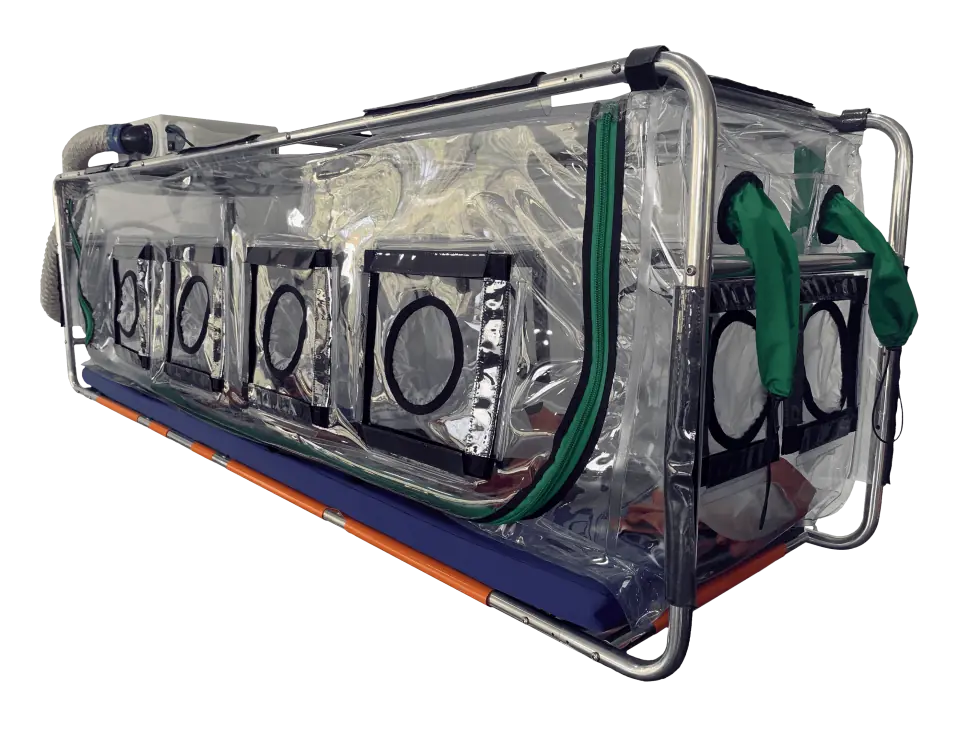
Isolation units: hospital isolation and transport systems for biocontainment
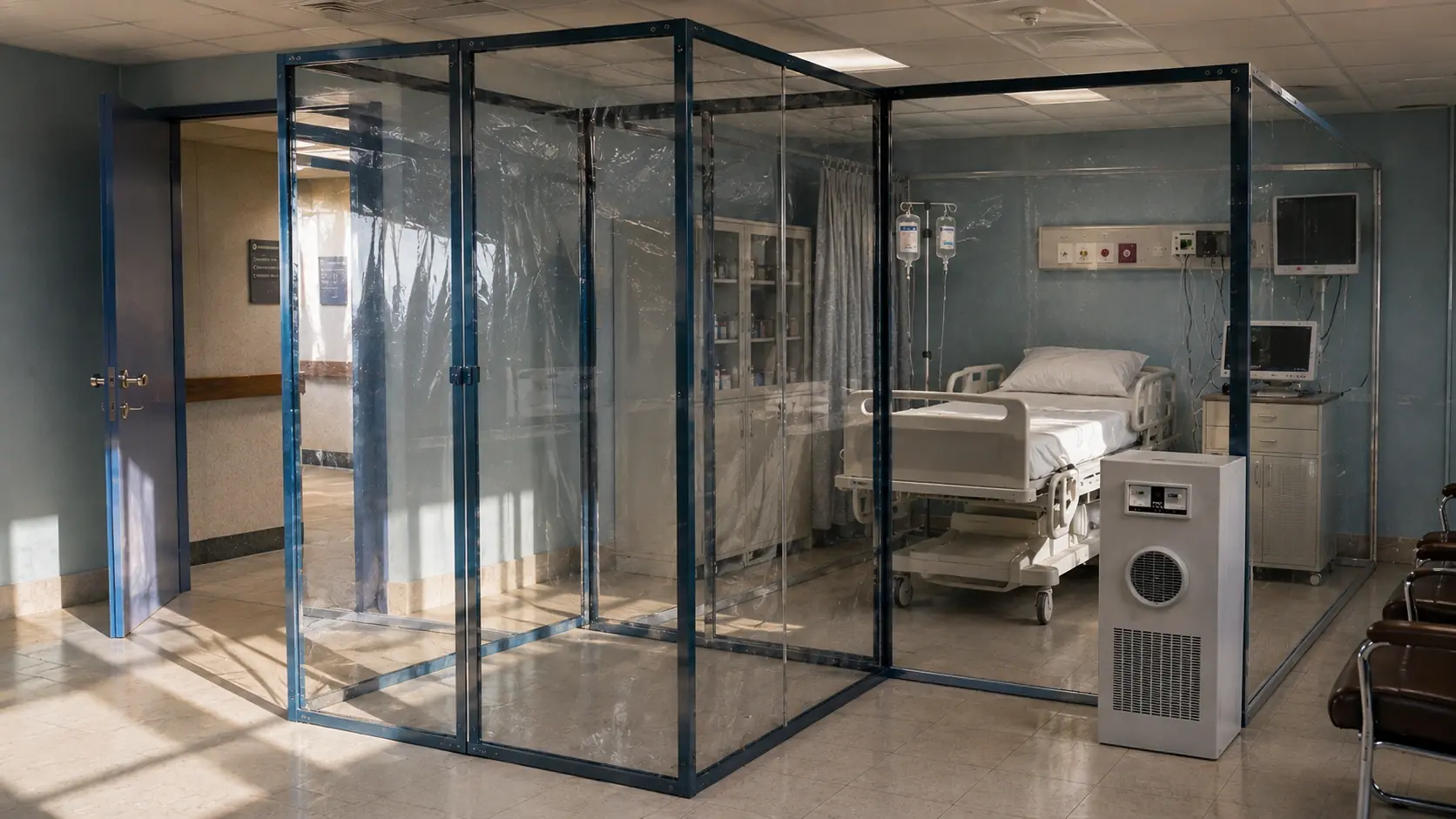
Our isolation units convert a standard area, a hospital room or a stretcher into a completely sealed environment with positive or negative air pressure.
They allow medical staff to work safely on highly infectious and contagious patients, and on patients with severe burns. Positive and negative pressure units help prevent the spread of pathogens through direct and indirect contact and droplet transmission, and maintain sterile restricted spaces. They are used in hospitals, emergency response centers and other medical facilities, and can quickly create temporary triage zones during contagious emergencies in schools, airports or gyms.
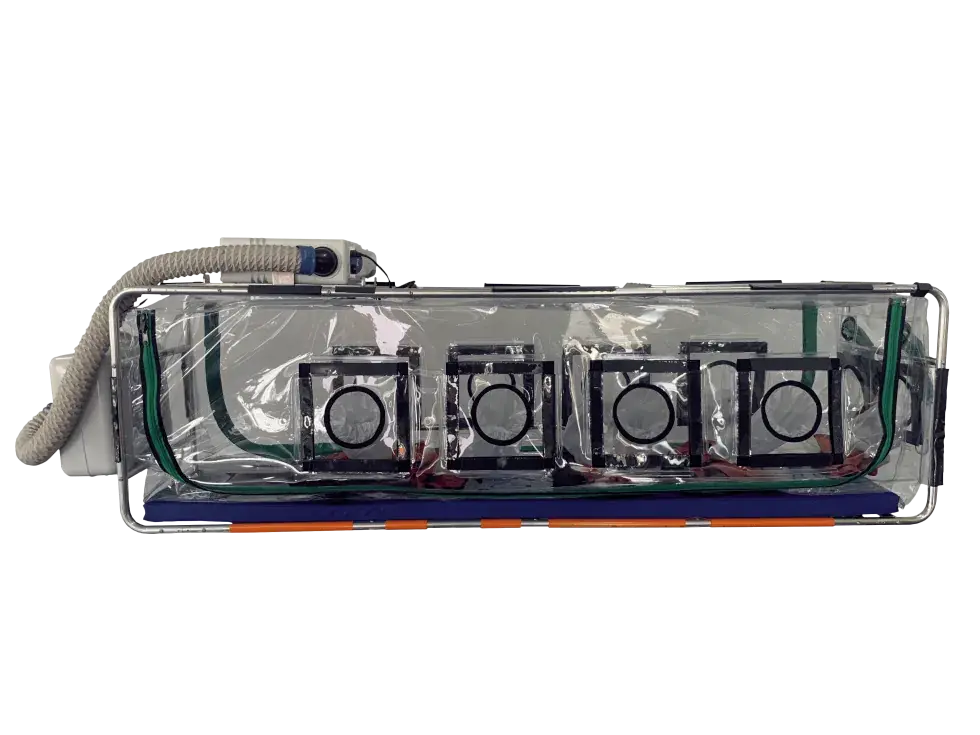 STR MK3Compact isolation unit placed on top of a hospital stretcher; U15 filtration, battery backup up to 12 hours, 200 kg load.View product
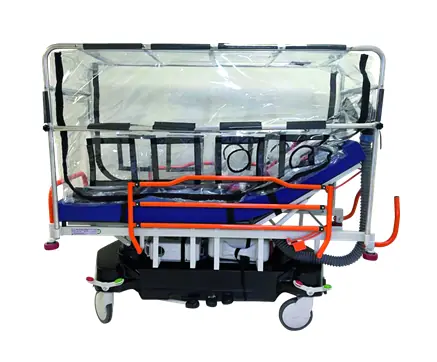 STR MK 4Emergency stretcher with isolation system; the STR MK 5 version adds a motorized fifth wheel.View product
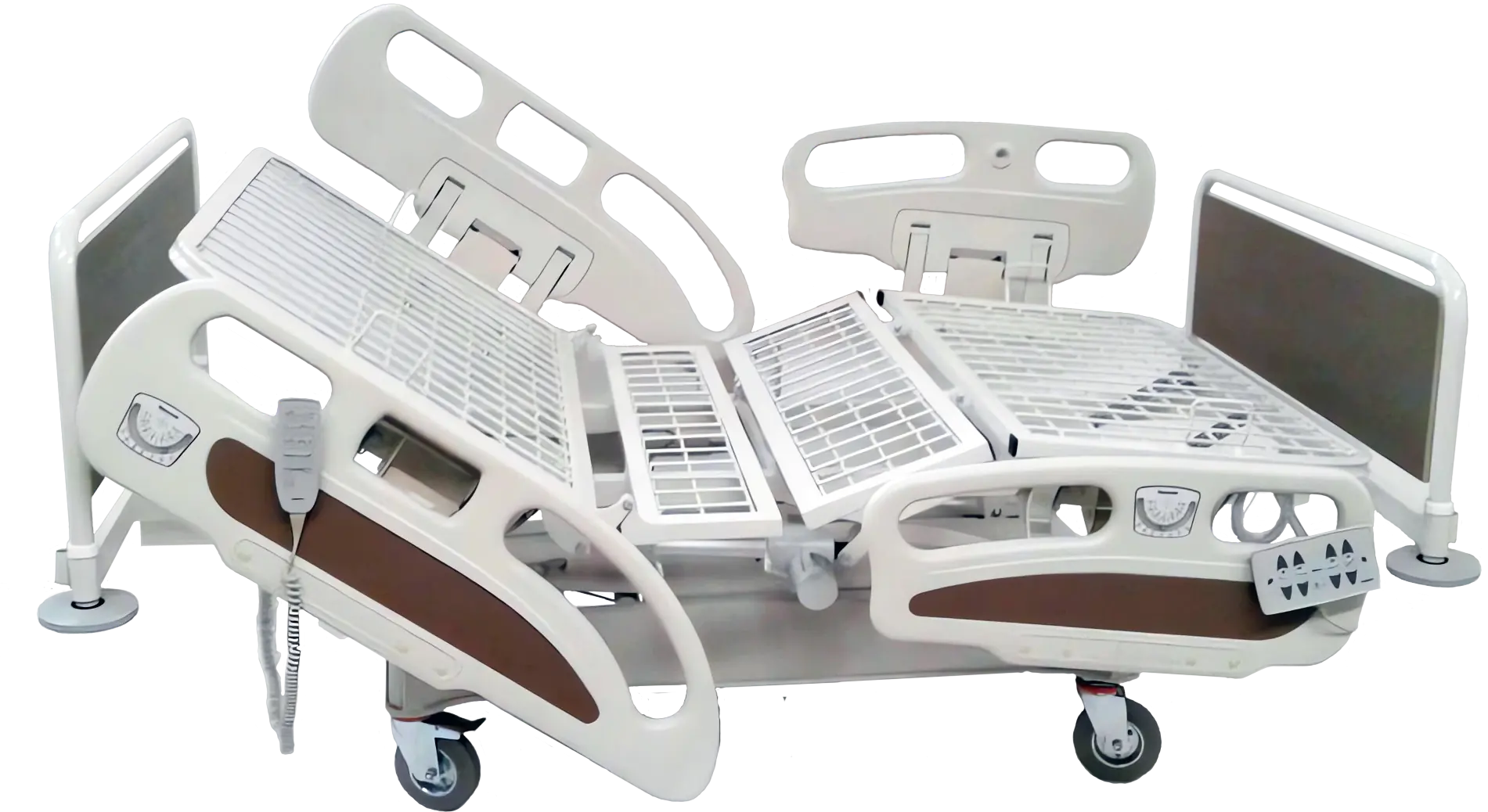
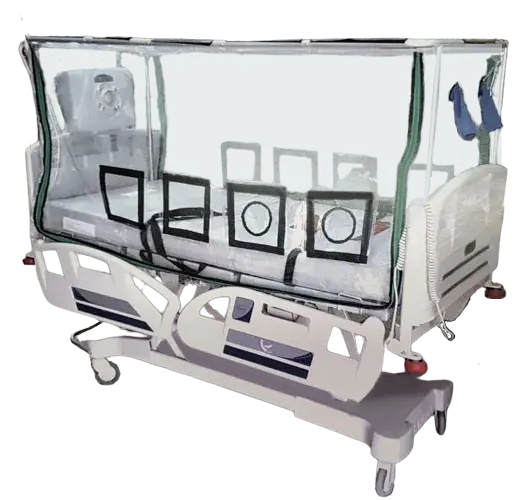 STR MK7 / STR MK8Hospital bed with biocontainment system; STR MK8 adds a motorized fifth wheel.View product
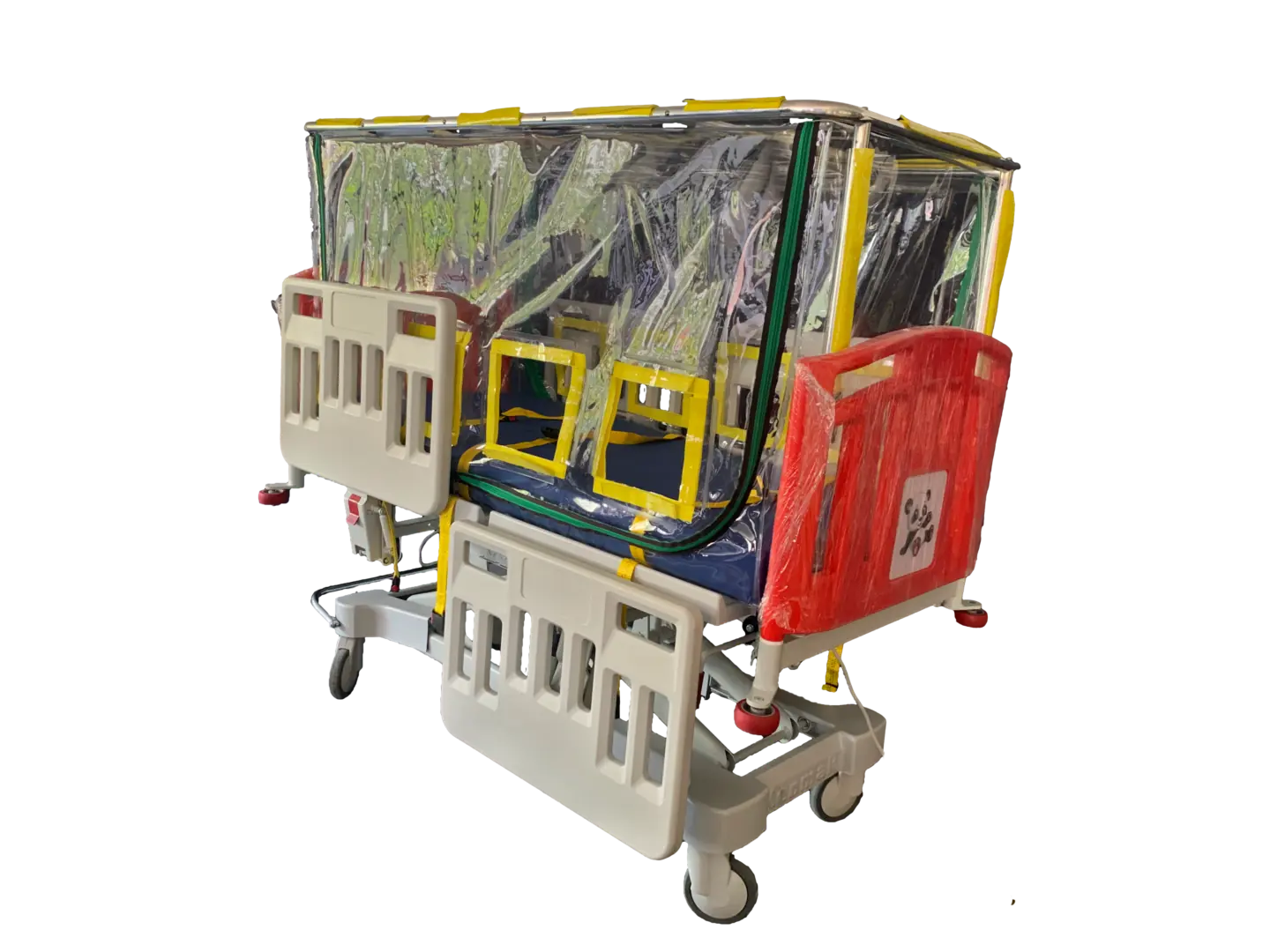 STR MK9Electric pediatric bed with biocontainment system for intensive care, anesthesia and resuscitation areas.View product
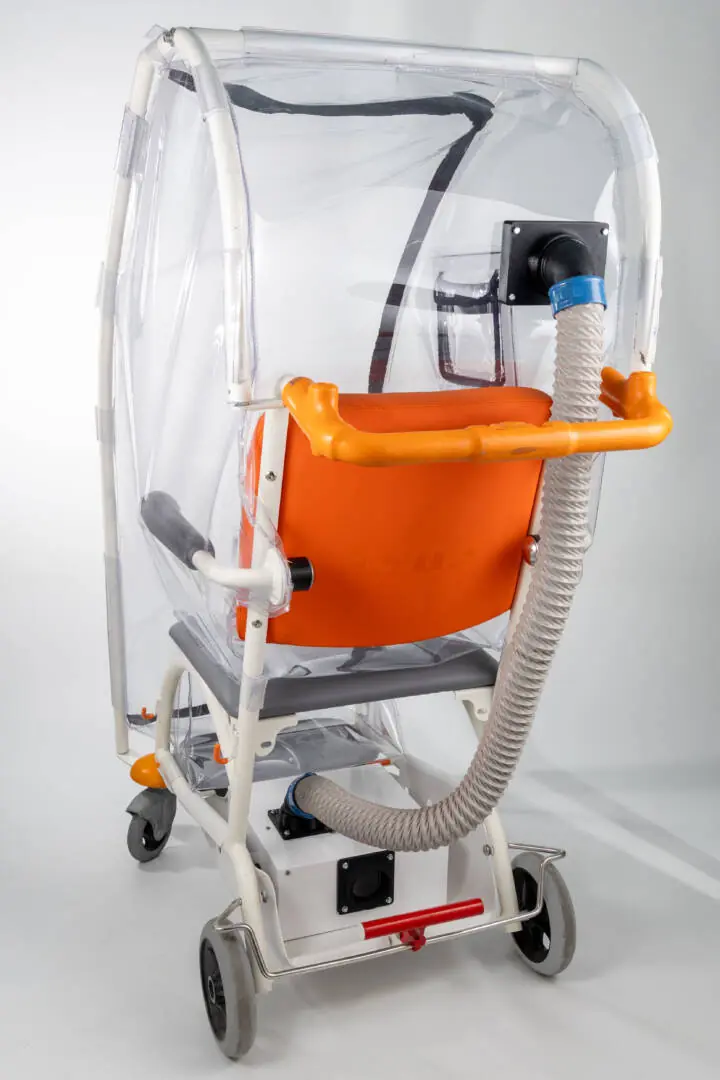 AuraControlled-pressure biocontainment chair for moving a patient within any hospital environment.View product
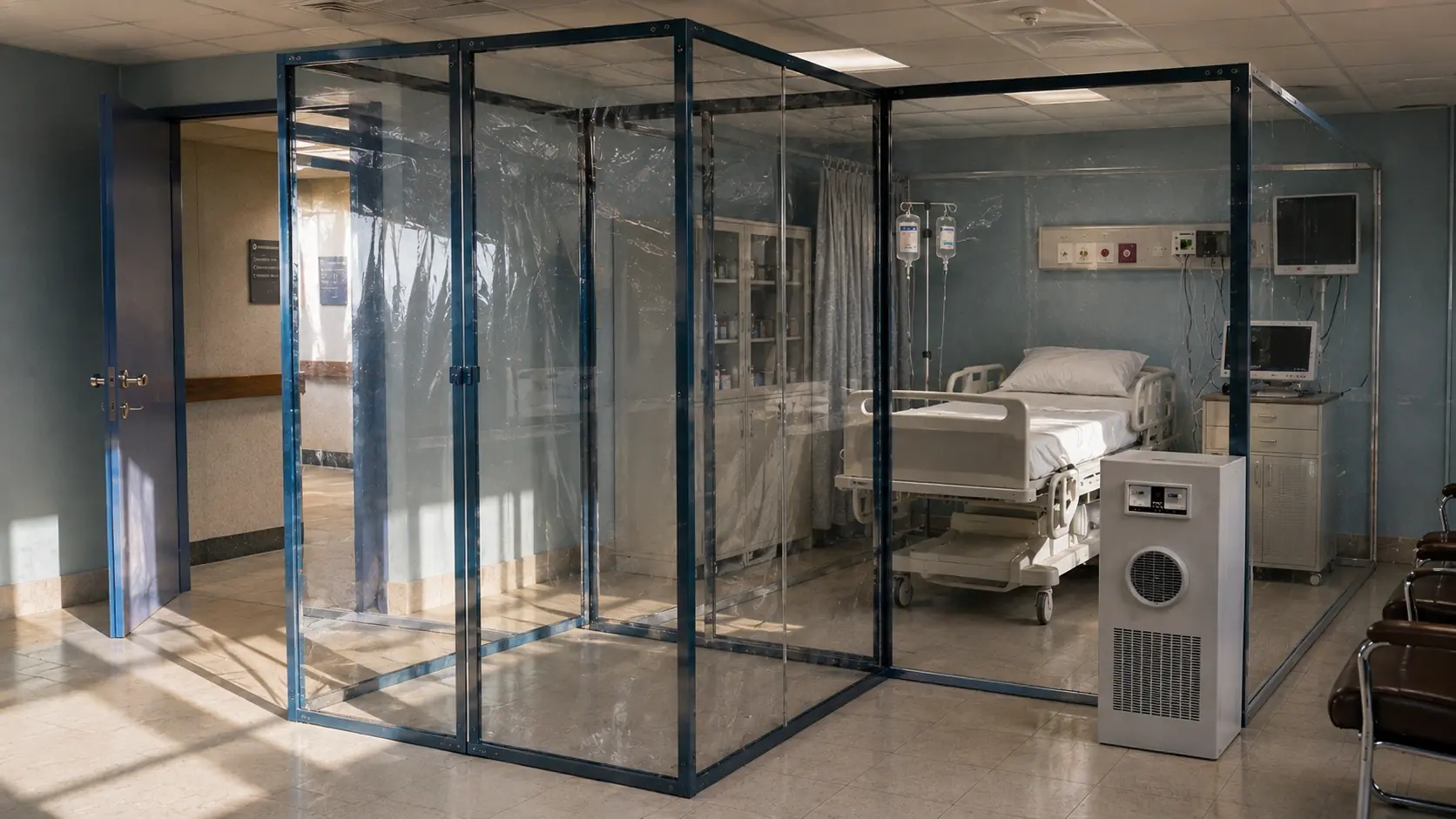 PandoraModular, custom-built isolation room with double doors; H14 filters, U15 on request.View product
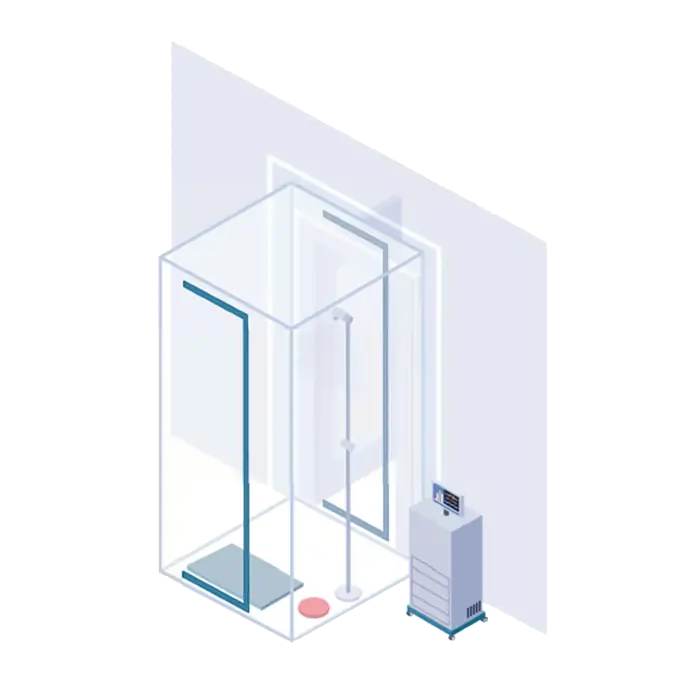 PithosMobile antechamber attached to an existing door frame, with an ultrasonic disinfectant nebulizer.View product
For background on isolation precautions, see the CDC Guideline for Isolation Precautions and our guide to negative and positive pressure isolation.
How do the hospital isolation and transport systems compare?
Choose by where the patient is: on a stretcher, in a bed, in a chair, or in a room.
The table summarizes the format and typical use of each isolation unit among our hospital isolation and transport systems.
| Product | Format | Typical use |
|---|---|---|
| STR MK3 | Isolation unit on a stretcher | Transport of an infectious or immunocompromised patient between departments or facilities |
| STR MK 4 / STR MK 5 | Emergency stretcher with isolation | Emergency room evacuation and treatment; MK 5 adds power assistance |
| STR MK7 / STR MK8 | Hospital bed with isolation | Transport, diagnosis and assistance within the facility; MK8 adds power assistance |
| STR MK9 | Pediatric bed with isolation | Intensive care, anesthesia and resuscitation for young patients |
| Aura | Isolation chair | Short transfers of seated patients, for example from the emergency room |
| Pandora | Modular room | Creating an isolation area of custom size inside a facility |
| Pithos | Mobile antechamber | Turning an existing patient room into a controlled room at the door |
Rooms and antechambers
When isolation must cover a whole space rather than a single patient, Pandora and Pithos extend hospital isolation and transport systems to room level. Pandora is a modular room assembled from prefabricated components and maintains pressure through a double-door configuration. Pithos attaches to the door frame of an existing room and limits the escape of contaminated air when doors are opened and closed. The guide to HEPA and ULPA filters explains the filter classes used across the range, and the infectious patient transport guide covers transfers between rooms.
Power-assisted beds and stretchers
Our motorized equipment lets a single healthcare worker move hospital beds, stretchers and medicine trolleys around humps, cables and slopes without physical strain.
Within our hospital isolation and transport systems, the power-assisted line covers stretchers, beds and mobility aids. Moving heavy medical equipment is physically demanding work. The integrated power-assisted system removes most of the physical exertion, with the aim of reducing the risk of injuries and strain while increasing efficiency, so staff can focus on patient care.
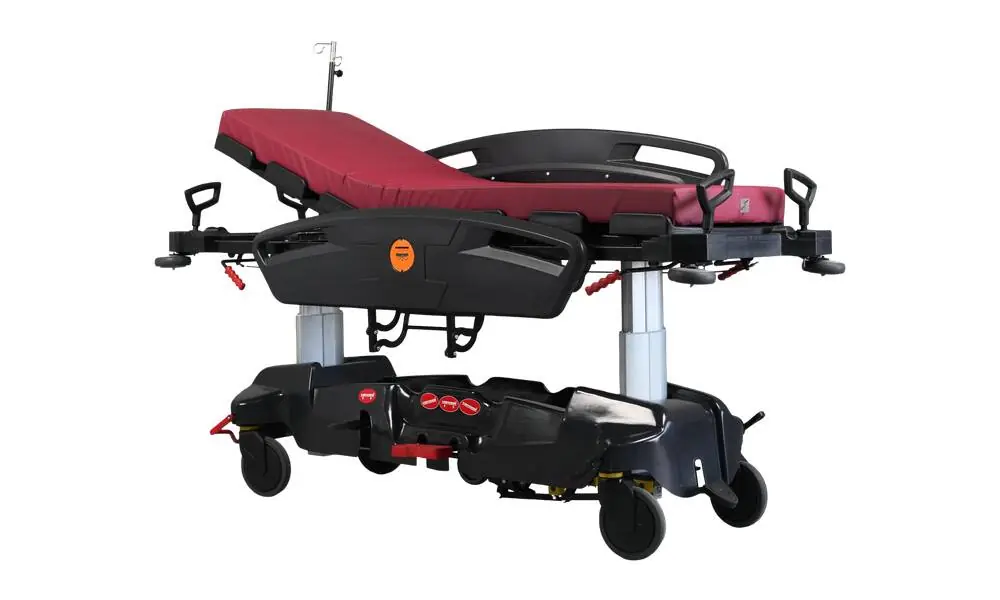 MoovieMotorized emergency stretcher, 2-section hydraulic, 250 kg safe working capacity.View product
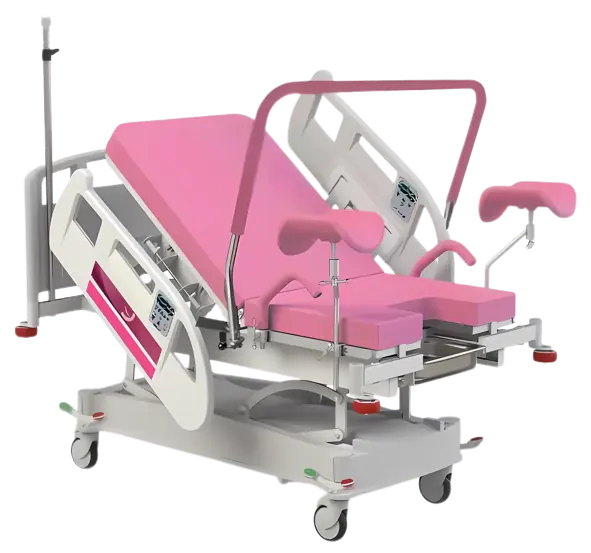 LotusMotorized delivery and obstetric surgery bed for labor, delivery and quick transfer to the operating room.View product
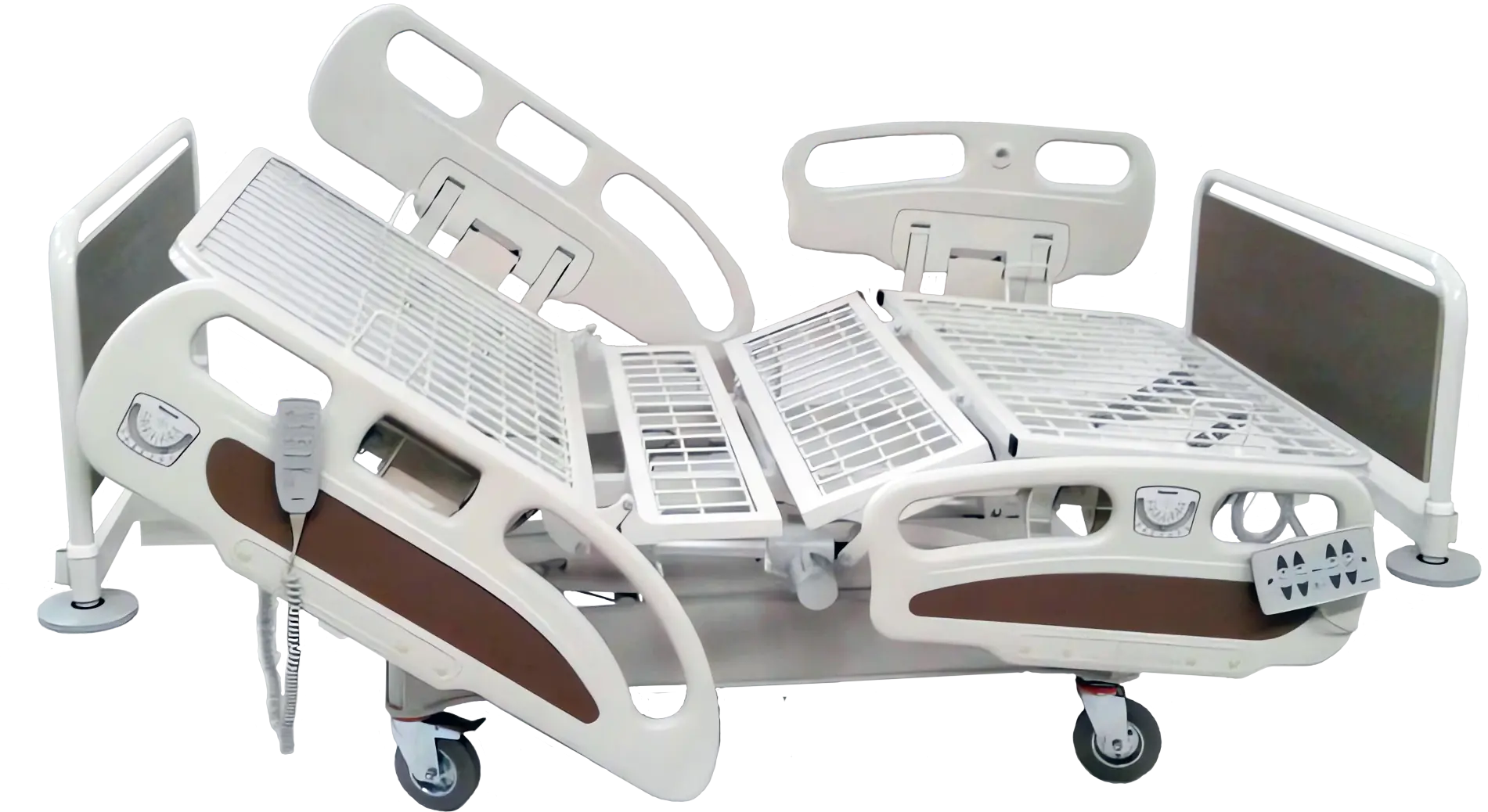 STR MK 10Bariatric care bed with 4 LINAK motors and a fifth wheel with 2 and 6 km/h speed settings.View product
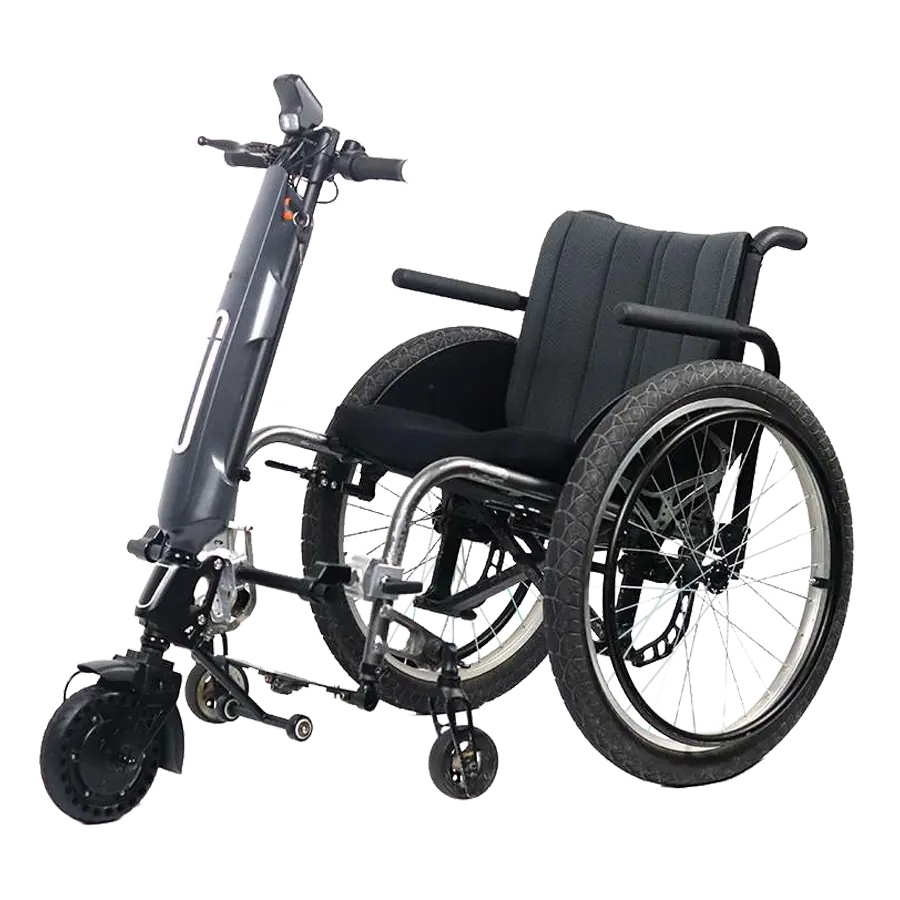 HandbikeElectric handbike that attaches to wheelchairs with a fixed front frame; up to 50 km range.View product
Manual handling is a well-known risk factor for musculoskeletal disorders, as explained by EU-OSHA. Read more in the guide to safe patient handling.
How does the motorized fifth wheel work?
A motorized, retractable fifth wheel under the frame drives the bed or stretcher while the caregiver steers with the handles.
- The wheel is installed on a damper device and retracts when not in use
- Two operating handles provide electric brake and change of direction
- A speed limit switch selects between two maximum speeds: on the STR MK 10, 2 km/h and 6 km/h
- Start-up push force and steering effort are reduced by up to 50%
- One person can push the bed or stretcher forward and backward with one hand
The same drive is used across our hospital isolation and transport systems, from the Moovie stretcher to the STR MK8 isolation bed.
Frequently asked questions about hospital isolation and transport systems
What are the two lines of hospital isolation and transport systems?
Isolation units, which protect people from infection, and power-assisted beds and stretchers, which protect staff from strain. Many hospitals need both.
Which isolation unit should I choose?
Choose by where the patient is: on a stretcher (STR MK3, STR MK 4 and STR MK 5), in a bed (STR MK7 / STR MK8, STR MK9 for children), in a chair (Aura), or in a room (Pandora and the Pithos antechamber).
Which products have the motorized fifth wheel?
The Moovie stretcher, the Lotus delivery bed and the STR MK 10 bariatric bed, as well as the motorized versions of the isolation units, STR MK 5 and STR MK8.
Can the hospital isolation and transport systems be configured?
Yes. Every product can be configured: clients choose specific components and accessories so that the equipment fits the ward, the patients and the procedures.
Need help choosing hospital isolation and transport systems?
Describe your wards, patients and procedures and we will suggest a configuration. You can also review the catalogues first.